Before and after
Listening examples from audio work: first the problem, then the result.
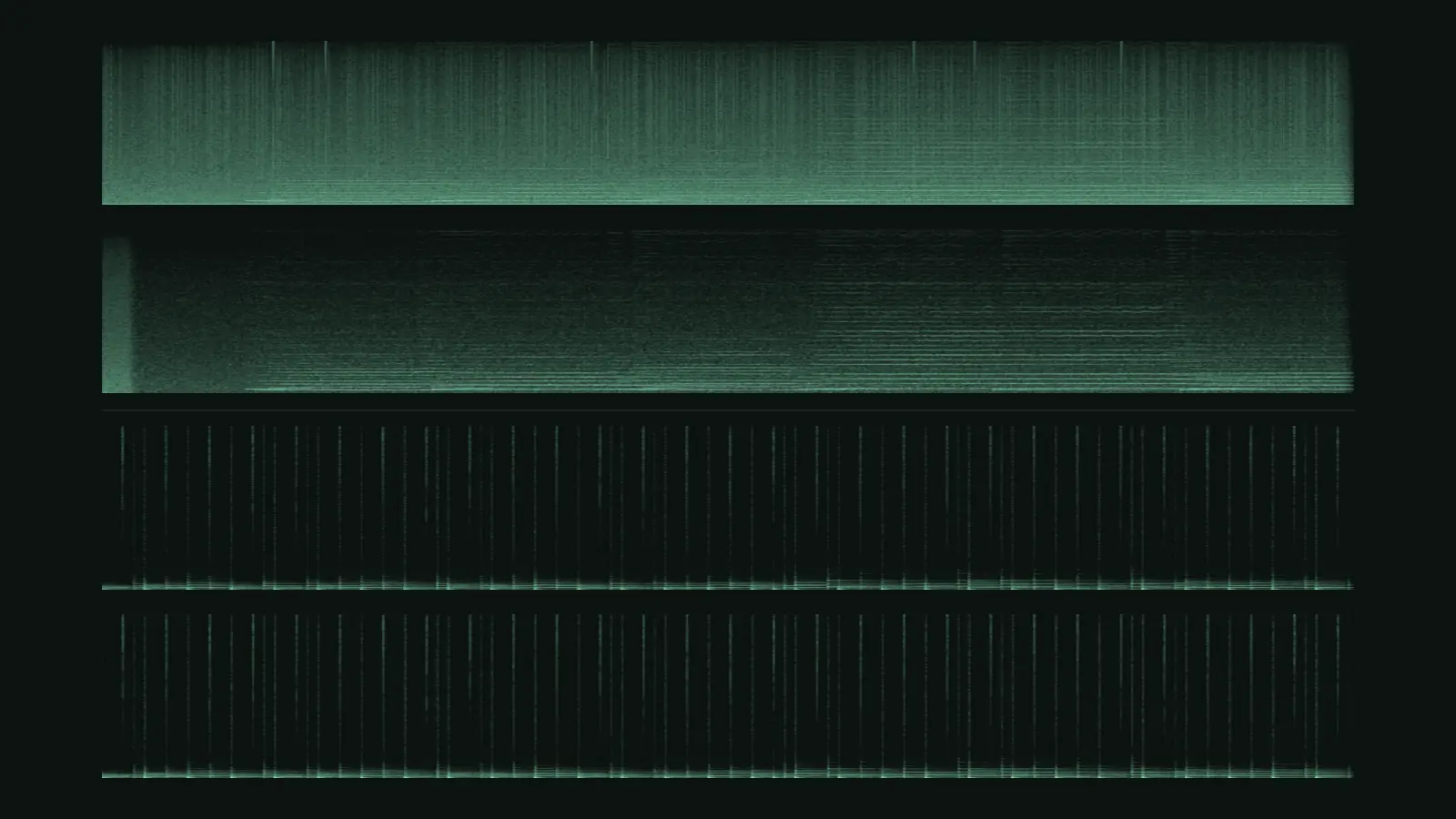
Every pair is matched to −23 LUFS so that only the sound decides, not the volume. Peaks stay below −1 dBTP. Everything is computed offline with the PSOrvia building blocks.
Phase alignment: Two microphones record the same source, the second 3.1 ms later (artificially). Together they sound hollow and thin because frequencies cancel (comb filter): peaks and notches in the spectrum are 20 dB apart. PSOrvia measures the offset and aligns the second microphone; afterwards the comb is gone and the difference is below 7 dB.
Room in the mix: A spoken voice sits under dense music. PSOrvia listens to the voice and lowers the music exactly where it masks the voice, by about 11 dB while the voice speaks. The voice itself is untouched.
Mastering: A deliberately flat, dull and narrow raw mix. PSOrvia compares it with the target profile and sets tone, multiband, width and limiter; the distance between peak and average drops from 16 to 15 dB.
Feedback: A hall microphone whose gain keeps rising: the loop of microphone, loudspeaker and room is computed and starts to ring first at 1.9 kHz, later at 3.7 kHz. PSOrvia detects the whistle and sets narrow notches; the level in the last two seconds is 12 dB lower.
Sharper attacks: A drum loop, smeared artificially (short reverb, saturation). PSOrvia emphasises the attack and shortens the tail; the distance between peak and average grows from 20 to 25 dB.
Softer attacks: As a counter-test the unsmeared loop is made soft: attack back, tail longer. The distance between peak and average falls from 22 to 16 dB.
How the examples were made: music and drums come from the house's own instruments. Disturbances, offsets and smearing were added artificially with a fixed random seed. None of it is a real recording from outside. The after version is the result of the respective engine alone, without any further editing. The voice in the "Room in the mix" example is a public-domain LibriVox reading (The Secret Garden).
Listen
Phase alignment: before
Keyboard: Space plays or pauses, arrow keys jump 5 seconds, Home and End go to start and end.
Phase alignment: after
Keyboard: Space plays or pauses, arrow keys jump 5 seconds, Home and End go to start and end.
Room in the mix: before
Keyboard: Space plays or pauses, arrow keys jump 5 seconds, Home and End go to start and end.
Room in the mix: after
Keyboard: Space plays or pauses, arrow keys jump 5 seconds, Home and End go to start and end.
Mastering: before
Keyboard: Space plays or pauses, arrow keys jump 5 seconds, Home and End go to start and end.
Mastering: after
Keyboard: Space plays or pauses, arrow keys jump 5 seconds, Home and End go to start and end.
Feedback: before
Keyboard: Space plays or pauses, arrow keys jump 5 seconds, Home and End go to start and end.
Feedback: after
Keyboard: Space plays or pauses, arrow keys jump 5 seconds, Home and End go to start and end.
Sharper attacks: before
Keyboard: Space plays or pauses, arrow keys jump 5 seconds, Home and End go to start and end.
Sharper attacks: after
Keyboard: Space plays or pauses, arrow keys jump 5 seconds, Home and End go to start and end.
Softer attacks: before
Keyboard: Space plays or pauses, arrow keys jump 5 seconds, Home and End go to start and end.
Softer attacks: after
Keyboard: Space plays or pauses, arrow keys jump 5 seconds, Home and End go to start and end.