Calculated, not sampled
A string, a tube, a skin or a plate is calculated while it vibrates. That is why you hear material, strike and bow in the sound itself and not just as a filter on top of it.
Framework SoundInstrumentsPhysics
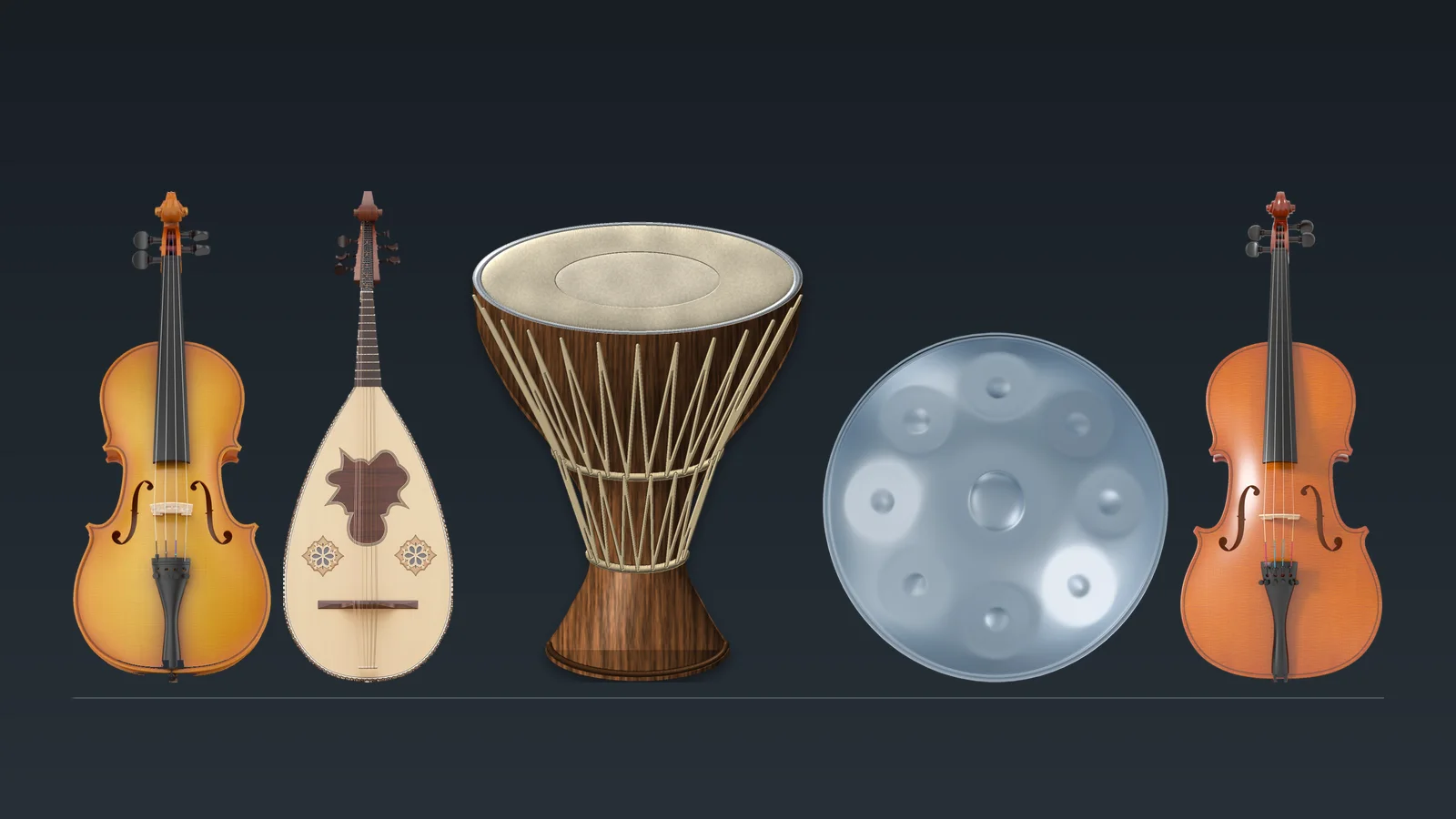
A sample is a photograph of a tone: recorded for one note, one kind of strike, one instrument in one room. A calculated model is the instrument itself, written as equations. It knows how tight the string is, how heavy the mallet is and how much air stands in the tube, and from that it works out again for every note what happens at every moment.
Strings, columns of air, skins and plates vibrate in modes, which are their partials. Which partials sound, how fast they die away and how they influence each other follows from the properties of the body: length, tension, thickness, density, shape. Change one property and the result of the calculation changes. No filter is laid over a finished sound.
That is why you hear the material. Density, stiffness and internal damping are part of the equations, so a bar of wood has different partials from a bar of aluminium and dies away differently. How clear that is you can hear in Material you can hear. How the same calculation carries from a small bell to a church bell is shown in From a little bell to a church bell.
That is why you hear the strike. The mallet meets the body with a contact whose duration depends on the hardness of its tip: the shorter the contact, the more overtones. You can read it in The strike makes the tone.
That is why you hear the bow. It sticks to the string, breaks loose and sticks again, thousands of times a second. Pressure, speed and spot decide whether the tone sings, scratches or only breathes. The bow makes the tone shows it.
The space around the instrument is part of the calculation too. Air, gas, water or climate change how fast sound travels and how strongly it is damped. The atmosphere is a control describes it.
A calculated instrument plays every note, including those that were never recorded, and every strike between soft and loud. Even two strikes of the same note are never copies of each other, as in No note sounds the same twice. Calculated does not automatically mean better: a model sounds only as real as the physics inside it. That is why we compare models with recordings of real instruments and keep improving them.
All calculated models, grouped by family and with sound examples, are on the page Instruments.